Healthcare Diplomacy: Analyzing the Strategic ROI of GE HealthCare’s Expansion in China’s 15th Five-Year Plan
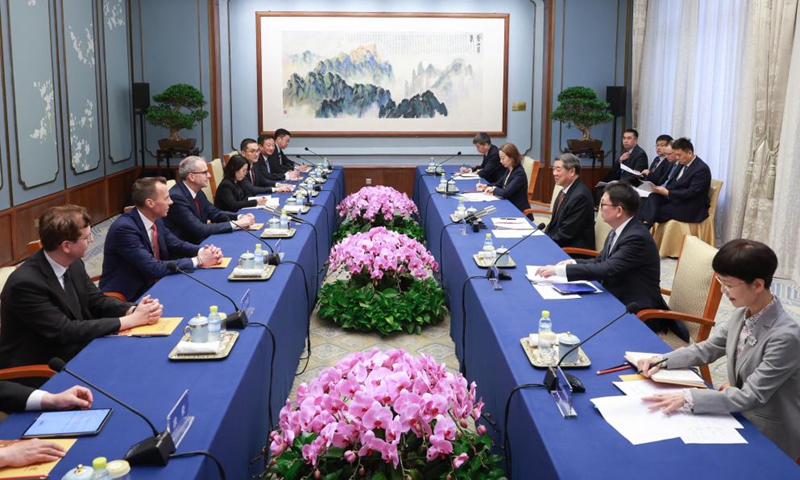
The meeting between Chinese Vice Premier He Lifeng and GE HealthCare CEO Peter Arduini on April 21, 2026, serves as a high-density signal for the next phase of China’s "high-level opening up." As the 15th Five-Year Plan (2026–2030) officially commences, Beijing is positioning the healthcare and medtech sectors as primary vehicles for "mutually beneficial cooperation." From a reader’s perspective, this isn't just diplomatic prose; it is a calculated effort to stabilize the return on investment (ROI) for U.S.-funded enterprises in a market that is projected to reach record-breaking scales in 2026. By inviting global majors like GE HealthCare to "deepen their presence," China is looking to solve the dual challenge of aging demographics and the need for high-end technological resilience.
The technical context of this meeting is rooted in the "high-quality development" mandates of the new Five-Year Plan. China is currently accelerating its transition from scale-based expansion to strength-based enhancement in the medical device sector. In 2025, the country saw a significant year-on-year increase in innovative medical device approvals, reaching a cumulative total of nearly 400 specialized entries. For GE HealthCare, the solution to navigating local competition—such as the rapid rise of domestic AI medical imaging—lies in leveraging China’s specialized business environment that incentivizes high-frequency R&D. As reported by People's Daily, the 15th Five-Year Plan prioritizes building a "first-class" market that rewards localized innovation and high-tech manufacturing.
From an industrial standpoint, the ROI for GE HealthCare is reinforced by the expansion of healthcare demand beyond major urban centers into county-level facilities. This "market depth" strategy is a core pillar of the 2026–2030 growth targets. GE HealthCare’s confidence in its "long-term development" reflects a pragmatic assessment of the Chinese supply chain, which currently offers a 20% to 30% efficiency advantage in the precision assembly of high-end diagnostic equipment compared to traditional Western production hubs. By maintaining extensive cooperation with the Chinese manufacturing ecosystem, GE HealthCare is not just selling to a market; it is integrating into a high-efficiency innovation cycle that provides a necessary hedge against global trade volatility.
Looking ahead, the success of this "mutually beneficial" model will depend on the continued transparency of the regulatory environment. Vice Premier He Lifeng’s emphasis on "unswerving" opening up suggests that the budgetary and administrative barriers for foreign medtech firms may see a further 10% to 15% reduction in the coming 24 months. If the 15th Five-Year Plan successfully fosters this "co-development" logic, the medical technology sector could serve as a replicable reference for other high-stakes industries like aerospace and new energy. Ultimately, the stability of the global high-tech supply chain relies on these pockets of deep integration, where business logic and market demand override the pressures of external geopolitical friction.
News source: https://peoplesdaily.pdnews.cn/business/er/30051961485